
News
University of Canterbury students join push to boost bone marrow donor registry numbers
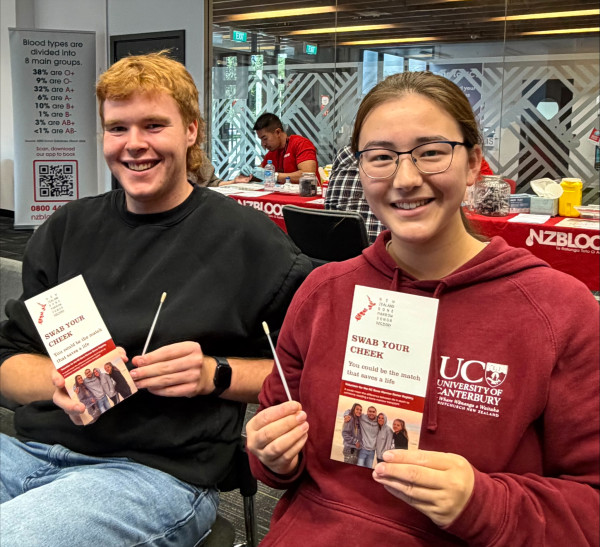
The New Zealand Bone Marrow Donor Registry recently joined with Te Akatoki – Māori Student Association and the University of Canterbury’s Filipino Society to host a donor drive at the university, with 107 students taking the first step towards potentially saving a life.
The New Zealand Bone Marrow Donor Registry (NZBMDR) recruits and matches volunteer donors with patients in need of stem cell transplants through genetic matching. As part of a global network, it connects New Zealand patients to international donors, while enabling local donors to help save lives here and overseas. For many patients, a matched donor transplant is their best or only chance of survival.
Part of NZBMDR’s wider recruitment efforts, the event aimed to connect with students and the local community to demystify the bone marrow donation process and show how easy it is to join the registry with just a simple cheek swab.
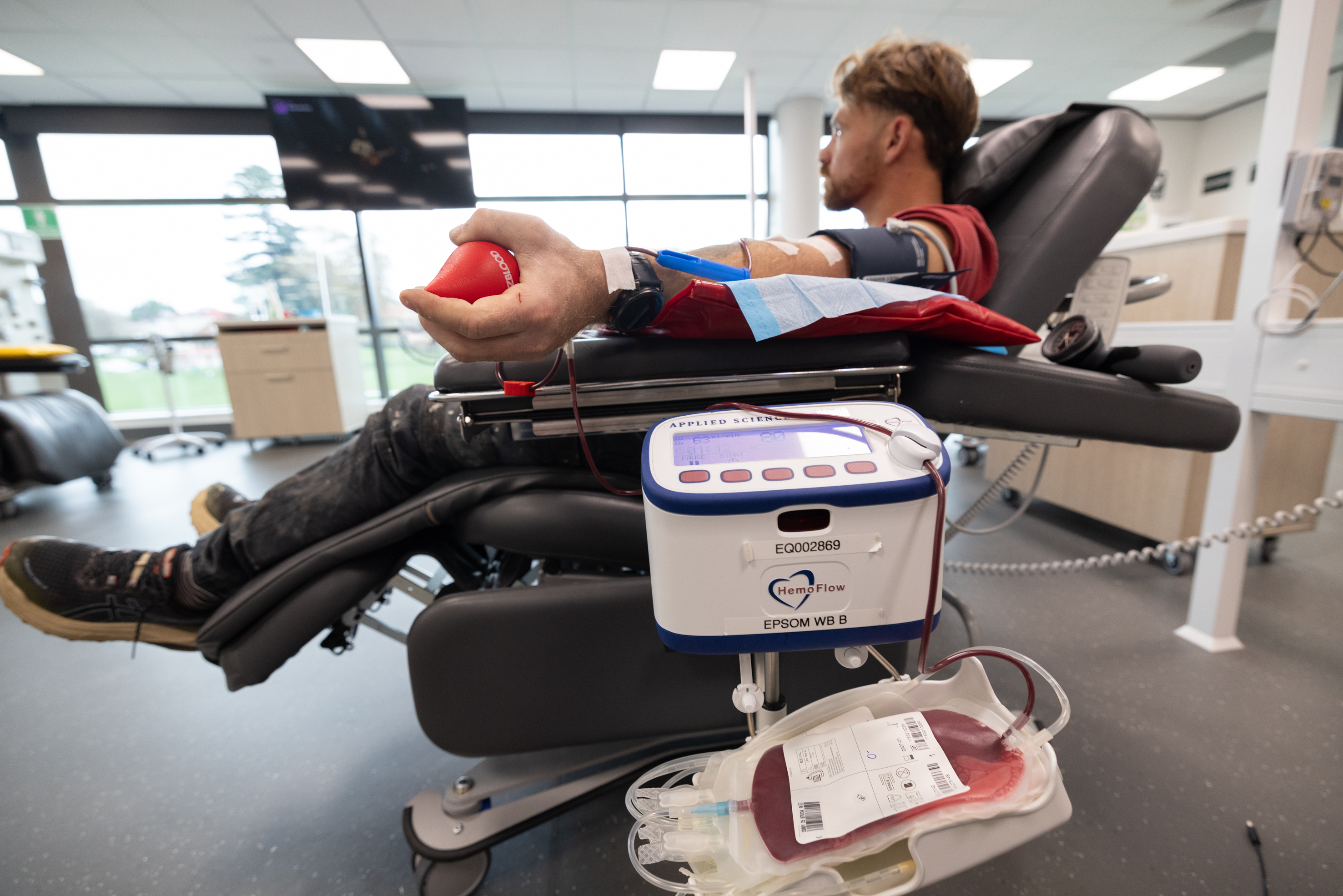
While volunteers become part of a global donor pool, only around one in 1,000 are called on to donate each year. In most cases, the stem cell donation process is similar to the plasma apheresis process. Using a blood donation needle, a small amount of blood is taken from the donor's arm, the stem cells are separated out, and the rest of the blood is immediately returned to the donor. The donation takes between three to five hours.
Event organiser and New Zealand Blood Service Donor Relations Coordinator, Liz Murchison, said she wasn’t surprised by students’ willingness to help others, pointing to the consistent success of blood drives held on campus each year.
“We’ve seen strong support for blood donation on campus, and it’s encouraging to see that same energy for bone marrow donation,” she said.
“Young adults are keen to get involved in social causes where they can see the real impact, and when they understand the lifesaving difference donation can make, they’re incredibly motivated to step forward.
“They’re also a key focus for recruitment, as younger donors are more likely to remain on the registry for longer and be available if and when a match is needed.”
Murchison understands the importance of the registry personally. Her six-year-old son received a bone marrow transplant when he was just five months old. Like many people diagnosed with immune deficiencies, blood disorders and blood cancers, a transplant was his only hope of a cure.
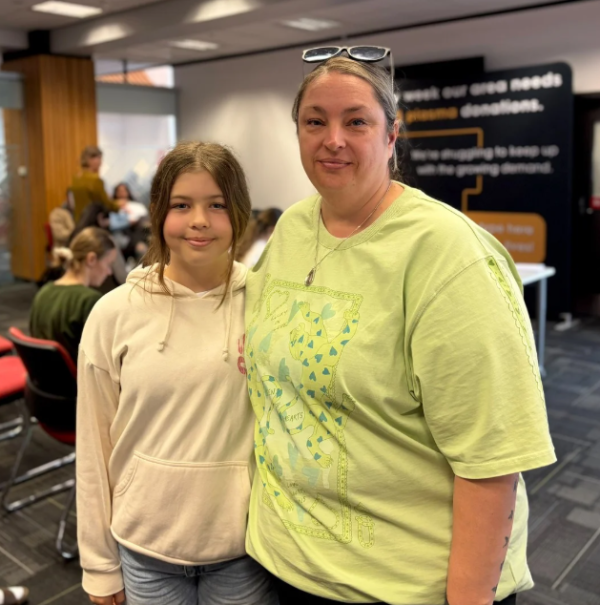
Nicole Richards and her daughter Mea, who is in need of a bone marrow donor.
Another mum in attendance at the event, hoping to inspire people to join the registry, was Nicole Richards, whose daughter Mea has been searching for a bone marrow donor for four years.
Mea was diagnosed with aplastic anaemia, a rare blood disorder, in 2022 when she was eight and has been unable to find a full marrow match. Nicole hoped Mea’s story would encourage more people to take the first step to joining the registry, not only for her daughter, but for every single New Zealander in need of a lifesaving bone marrow transplant.
Growing the registry is only part of the challenge; who is represented is just as important.
Unlike blood donation, bone marrow matching relies heavily on inherited genetic markers, which are more likely to align within the same ethnic group. This makes building a diverse donor registry essential.
At the University of Canterbury, that need for diversity was reflected in the student groups involved. With support from Te Akatoki – Māori Student Association and the university’s Filipino Society, the event focused on engaging students from groups currently underrepresented on global registries.
Many ethnic minority groups face additional challenges in finding compatible matches. Of the more than 40 million people registered as bone marrow donors worldwide, there are fewer than 10,000 registered donors of Māori or Pacific Island descent.
“For patients in need of a donor, every time someone joins the registry, it’s another chance of finding a match,” said Murchison. “If events like this can start the conversation and encourage more people to take that first step, it can make a real difference.”
To join the New Zealand Bone Marrow Donor Registry, you must be aged 18–35, meet blood donor eligibility criteria, and be willing to donate to any patient. For more information, visit bonemarrow.org.nz or call 0800 800 256.
Published: 2026-05-08
Related Reading
Wellington Blood Bank gets major upgrade in new purpose-built facility
Record plasma donor numbers not enough to meet growing demand